Stainless Steel Retractable Ratchet Straps: Why You Need One?
Key insights
- Stainless steel retractable ratchet straps last longer because they don’t suffer from the rust and corrosion issues that weaken regular and alloy steel.
- Most strap failures come from moisture damaging the internal spring, leading to weak tension or jamming.
- Stainless steel delivers smooth, consistent retraction in humidity, rain, snow, saltwater, dirt, and extreme temperatures.
- Best for people in humid, coastal, or snowy climates and frequent users like contractors, movers, or outdoor/marine enthusiasts.
- Not always necessary for dry climates, indoor-only use, or very heavy loads where alloy steel offers higher strength.
- Strapinno offers premium stainless steel options designed for outdoor, marine, and everyday hauling.
If you’ve ever owned a retractable ratchet strap, you probably know the story: It works perfectly on day one, and it still feels solid the first few months… and then one rainy season or one winter later, the strap suddenly stops retracting smoothly, or worse, refuses to retract at all.
Most people assume this happens because the strap is “old” or “overused.” But in reality, the culprit is almost always something much simpler: corrosion inside the mechanism, especially in the spring.
And yet, almost no one talks about this. That’s why you are here, and why this guide exists. We have spent years designing, refining, and testing retractable ratchet straps in real-world environments. One thing became very clear: material choice is the difference between a strap that lasts a season… and a strap that lasts years.
But here’s the interesting part: even though corrosion is the #1 reason retractable straps fail, very few companies invest in stainless steel mechanisms. Not because stainless steel isn’t better, it definitely is, but because it’s harder and more expensive to produce.
This article is your inside look into why stainless steel matters, and how the right material can genuinely change the lifespan and safety of your straps, especially if you live near the coast, deal with humidity, or simply want something that won’t quit on you. Let’s dive in, and we promise you’ll never look at tie-downs the same way again.
Strapinno’s Retractable Ratchet Straps with Stainless Steel Spring
Outdoor Series
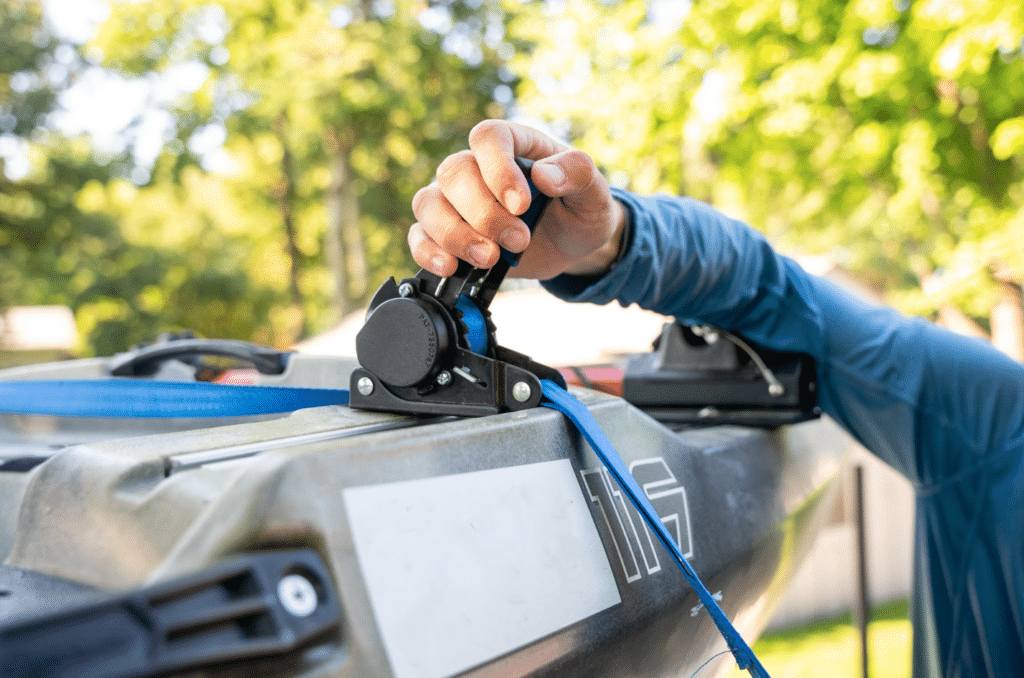
Perfect for motorcycles, kayaks, surfboards, dirt bikes, and general cargo.
| Product | WLL / BS | Colors | Price |
| 1″ × 6′ (4-Pack) | 500 / 1,500 lbs | Blue, Red, Green, Black | ~$52.80 |
| 1″ × 10′ (4-Pack) | 500 / 1,500 lbs | Blue, Red, Green, Black | ~$64.80 |
Marine Series
Purpose-built for boats and jet skis, designed to withstand water, salt, and UV exposure. We highly recommend our 1 7/8″ Dual Lock Ultra Stainless, where every metal component you see, including the body, spring, hook, and all visible hardware is made from stainless steel.
| Product | WLL / BS | Price |
| 1 7/8″ Dual Lock Transom | 550 / 1,650 lbs | ~$94.80 / $72.80 |
| 1 7/8″ Two-Way Transom | 550 / 1,650 lbs | ~$94.80 / $72.80 |
| 1 7/8″ Dual Lock Ultra Stainless | 550 / 1,650 lbs | ~$108.00 |
Transport Series
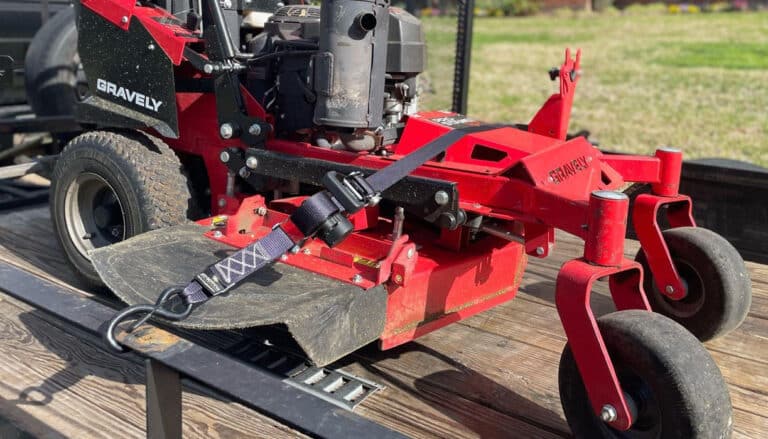
These are the heavy hitters for ATVs, UTVs, cars, and even lawn equipment.
| Product | WLL / BS | Hook Type | Price |
| 2″ × 12’ S Hook (2-Pack) | 1,667 / 5,000 lbs | S-Hook | $76.80 |
| 1.5″ × 12’ S Hook (2-Pack) | 1,617 / 4,850 lbs | S-Hook | $68.50 |
What Wears Down Retractable Ratchet Straps?
If retractable ratchet straps had a diary, it would probably read something like this:
“Day 1: Feeling strong and ready for adventure!
Month 6: Still doing great, a little dirt here and there.
Month 12: Why… why am I suddenly tired… why can’t I retract like I used to?”
The truth is, retractable straps go through a lot more than people realize. They get pulled, twisted, dragged across truck beds, left in rain, baked in sun, frozen in winter… and through it all, we expect them to perform perfectly every single time.
But let’s break down what actually wears them down, because once you understand this, stainless steel starts to make a whole lot of sense.
1. Moisture: The Silent Strap Killer
Rain. Humidity. Morning dew. Snow.
We ain’t joking, they’re the biggest enemies of internal metal parts.
Most retractable straps use ordinary steel springs. And once moisture gets inside the housing? The spring begins to rust. Rust weakens the metal. A weakened spring can’t recoil properly.
2. Dirt & Dust Sneaking Into the Mechanism
Dusty work sites, gravel roads, construction zones, all that tiny debris loves to sneak into small spaces. Over time, dirt builds up inside the spring chamber and gears, creating friction and slowing down the recoil. It’s like trying to run while someone fills your shoes with sand. Well it still works, but definitely not as well.
3. Temperature Swings: Hot → Cold → Hot Again
Metal doesn’t enjoy extreme weather mood swings.
- Heat expands the metal
- Cold contracts it
- Repeating this cycle over and over creates fatigue
Springs made from lower-quality steel lose tension faster in these environments. And once the tension goes? So does smooth retraction.
4. Repeated Heavy Use
If you haul gear every day, your strap is basically doing strength training year-round. The mechanism constantly:
- Absorbs sudden loads
- Controls recoil speed
- Handles vibration during travel
Most retractable ratchet straps aren’t designed to handle thousands of cycles without wear, unless the internal parts are built with durability in mind.
5. Poor-Quality Metal in Key Components
Many retractable straps look similar on the outside. But inside? They can be completely different.
Lower-grade steel can:
- Rust quickly
- Crack under stress
- Lose tension
- Wear out fast
And because these parts are hidden inside the housing, most users don’t realize the difference until something fails. That’s why material choice is so important, and why stainless steel is such a game changer.
How Does Stainless Steel Help Retractable Ratchet Straps Last Longer?
If standard retractable straps break down because of rust, friction, dirt, and metal fatigue…
then stainless steel is basically the superhero material that steps in and says:
“Relax. I’ve got this.”
But why is stainless steel such a big deal? And how does it actually keep retractable straps from failing? Let’s break it down in a simple, practical way, no engineering degree required.
1. Stainless Steel Doesn’t Rust the Way Regular Steel Does
This is the heart of it. Stainless steel contains chromium, which forms an invisible protective layer the moment it touches oxygen. This layer does something magical:
- Stops rust before it even begins
- Prevents corrosion from spreading
- Self-heals if scratched
Meaning moisture, which is the biggest strap killer, suddenly becomes far less dangerous.
So instead of the spring corroding from the inside out, stainless steel keeps its strength and elasticity for years. If retractable straps had conversations, the stainless steel spring would tell moisture: “Sorry, you’re not invited in.”
2. More Consistent Spring Tension
A retractable strap depends on its spring like a car depends on its engine. If the spring weakens, the whole strap suffers:
- Retraction becomes sluggish
- Webbing gets stuck
- Mechanism jams
- Eventually, the strap stops functioning altogether
Stainless steel springs maintain their tension much better through:
- Temperature changes
- Frequent use
- Humidity and rain
- Long-term load cycles
This means smoother retraction, not just on day one, but year after year.
3. Better Resistance to Dirt, Dust, and Debris
While stainless steel doesn’t magically repel dirt, it handles dirty conditions far more gracefully. Why? Because stainless steel surfaces don’t degrade as quickly, which means:
- Less friction inside the mechanism
- Fewer weak points for dirt to stick
- Smoother movement even when debris gets inside
- No “grinding” sensation when the strap retracts
In other words, stainless steel stays functional even in environments where ordinary steel begins to struggle.
4. Superior Strength Through Temperature Swings
Standard steel expands and contracts in extreme temperatures, which slowly fatigues the metal. Stainless steel? Much more stable.
It resists:
- Summer heat
- Winter cold
- Freeze–thaw cycles
- UV exposure
So the spring and internal components don’t lose tension or crack under stress. If you live in a snowy climate, a humid state, or anywhere with seasonal extremes, this difference is huge.
5. Longer Overall Lifespan = Better Value
A stainless steel internal mechanism isn’t just “nicer”, it dramatically reduces the chances of:
- Rusted springs
- Jammed recoil systems
- Sudden failures
- Needing a replacement every year
This is why people who use straps often, movers, contractors, outdoor enthusiasts, eventually realize stainless steel saves them money in the long run. Don’t get us wrong, it’s not about being fancy at all. It’s about not having to throw away another strap next season.
6. The Most Important Part: Stainless Steel Protects the Heart of the Retractable System
When you upgrade the part that controls:
- Retraction speed
- Smoothness
- Tension
- Resistance to wear
…you upgrade the entire strap.
That’s why Strapinno chose to integrate stainless steel into key components, because real durability begins inside the mechanism, not just on the outside where everyone can see.
Stainless vs. alloy steel vs. regular steel
If you’ve ever looked at ratchet straps online, you may have noticed something confusing: most brands don’t specify what kind of metal they use.
And honestly, metal types can feel like a dry topic… but when it comes to durability, weather resistance, and long-term performance, the metal inside your strap matters a lot.
Feature | Regular Steel | Alloy Steel | Stainless Steel |
Rust Resistance | ★☆☆☆☆ (Rusts quickly) | ★★★☆☆ (Better than regular steel, still rusts) | ★★★★★ (Excellent, long-term protection) |
Durability Over Time | Low | Medium | High |
Performance in Humid / Coastal / Snow Areas | Poor | Fair | Excellent |
Strength & Load Capacity | Medium | Very high | Lower than alloy steel |
Maintenance Needs | High | Medium | Low |
Cost to Manufacture | Low | Medium-high | Higher |
Best for… | Light indoor use | Heavy-duty, high-load hauling | Heavy use, harsh climates, long-term reliability |
Who Actually Needs Stainless Steel Retractable Ratchet Straps?
Not everyone needs stainless steel ratchet straps, and that’s completely okay. But for certain people and certain environments, stainless steel is a game changer. If you’ve ever found yourself frustrated with straps that rust, jam, or lose tension too quickly, this part is for you. Let’s look at the situations where stainless steel really shines.
1. Anyone Living in Humid or Coastal Areas
Humidity is the silent villain of retractable straps. If you live somewhere warm, rainy, or near the coast, your straps face: Constant moisture in the air Salt in coastal regions Frequent wet–dry cycles that accelerate rust Most standard steel springs simply aren’t built for this.
Stainless steel, on the other hand, thrives in these exact conditions.
Ideal for people in:
Florida, Hawaii, Washington, Southeast Asia, Gulf Coast states, or anywhere humidity is part of daily life. If your straps usually rust or jam after a season, stainless steel can solve that problem at the root.
If your straps usually rust, jam, or slow down after a season, stainless steel can solve that problem at the root.
2. People Who Use Straps Frequently (Pros, Contractors, Movers)
If you haul gear every week or every day, you rely on your straps the way most people rely on their tools. Daily use means:
- Constant pulling
- Repeated tension cycles
- Exposure to dust and dirt
- Wear on the internal mechanisms
With this level of use, a regular steel spring ages quickly. Stainless steel lasts significantly longer, delivering smoother, more consistent performance even after hundreds of cycles.
Perfect for:
- Moving companies
- Contractors & construction crews
- Mobile businesses
- Landscapers
- Delivery vans
- Professional hobbyists (kayaks, motorcycles, e-bikes, etc.)
If you use straps as part of your work, stainless steel pays for itself through longer lifespan and fewer replacements.
3. Outdoor & Adventure Users Who Deal With Water
Some people simply ask more from their gear, and outdoor environments are tougher than they look. If you strap down items that get wet, muddy, or dirty, stainless steel helps prevent the internal mechanisms from degrading.
Great for anyone using straps with:
- Kayaks
- Paddle boards
- Fishing gear
- Small boats
- Camping equipment
- Off-road vehicles
Water is a normal part of your activities, and your straps should be designed for it.
4. People in Snowy or Cold States
Winter is just as harsh as humidity, just in a different way. Cold temperatures can weaken low-quality steel springs, causing:
- Sluggish recoil
- Reduced tension
- Faster fatigue
- Increased chance of breakage
Snow and road salt also increase moisture exposure, which speeds up corrosion inside retractable mechanisms. That’s where stainless steel makes a huge difference.
That’s where stainless steel makes a real difference.
Stainless steel is especially helpful if you live in places with long winters or heavy snow, such as:
- The Northeast or Midwest U.S.
- Mountain states with freezing temperatures
- Northern regions of the U.S.
- Canada, including provinces like Québec, Ontario, and the Prairies
In these environments, straps often sit in freezing conditions for months at a time. Stainless steel stays more stable through freeze–thaw cycles and helps maintain smooth retraction when you need it most.
When Stainless Steel Is Not Necessary
With all the advantages stainless steel brings, it’s easy to assume it’s the best choice for everyone. But here’s the honest truth, and it’s something most brands never explain:
– Stainless steel is amazing… but not always the right material for every situation.
– Some people genuinely don’t need it.
– And in a few cases, stainless steel may not meet your strength requirements.
We never want you to buy more than you need. So here are the scenarios where stainless steel is helpful, but not required, and situations where it might not even be the best option.
1. When Your Straps Are Stored Indoors Most of the Time
If your straps stay inside:
- A toolbox
- A trunk
- A garage
- A storage room
…they aren’t exposed to the biggest enemies of retractable mechanisms: moisture, salt, dirt, and extreme weather. Stainless steel will still last longer, but the difference is much smaller.
2. Dry, Low-Humidity Regions
If you live somewhere mostly dry and sunny, stainless steel’s corrosion resistance won’t be used to its full potential. Moisture-related failures are rare, meaning standard steel can last a longer time.
3. When You Need Higher Strength Capacity for Heavy Loads
Here’s something most people don’t know: Stainless steel is actually softer than regular carbon steel.
That means:
- It’s harder to use for large, heavy-duty, or high-capacity straps
- It may not meet the Working Load Limit (WLL) required for hauling very heavy objects
- Larger or longer stainless steel springs become more difficult to engineer without losing tension
So if you’re hauling something that requires high strength like:
- Large ATVs
- Heavy machinery
- Big trailers
- Construction materials
- Industrial loads
…you may need a strap made with stronger alloy steel components rather than stainless steel.
In these high-capacity situations, durability and corrosion resistance are important, but strength rating must come first.
In other words:
If your #1 priority is maximum hauling power, stainless steel may not be the best match for your needs, and we’ll always be upfront about that.
4. When Budget Matters More Than Long-Term Durability
If you’re buying straps for a one-time move, a temporary need, or a project where the lowest upfront cost matters, a standard or coated alloy steel ratchet strap may be the more practical choice.
Stainless steel is a long-term investment, not a budget solution, and that’s perfectly okay.
Final thoughts
If you’re ready for smoother retraction, longer lifespan, and worry-free hauling, your next strap should be stainless steel. Find your perfect match at Strapinno!