How to tie down a lawn tractor to a trailer? 6 Easy Steps!
A guide to efficiently moving lawn care equipment during the peak mowing season.

To tie down a lawn tractor to a trailer, use four ratchet straps attached to four independent anchor points, position the mower to maintain proper tongue weight, engage the parking brake, and tighten each strap until the mower cannot shift during transport.
One of the best tools for the job? Retractable ratchet straps. In today’s article, we’ll go over some key steps and tips for using these straps to make sure your lawn care equipment stays safe and sound during transport.
Commercial operators in the U.S. transporting cargo on public roads using vehicles that meet the FMCSA definition of ‘commercial motor vehicles’ (49 CFR §390.5) must comply with applicable FMCSA cargo securement regulations (49 CFR Part 393, Subpart I).
Before We Start… Why Properly Securing a Lawn Tractor Matters?
A lawn tractor that isn’t properly secured can shift, bounce, or tip during transport even on short trips. Sudden braking, sharp turns, uneven roads, or emergency maneuvers can all create enough force to move heavy equipment if it isn’t tied down correctly.
Beyond damaging your mower, an unsecured load can affect trailer stability, increase stopping distance, and create a serious hazard for other drivers. Even small amounts of movement during transport can loosen straps over time, making the load less secure the longer you drive.
That’s why it’s important to use the right tie-down equipment, secure the mower at four independent points whenever possible, and check the straps before and during your trip.
Note: During transport, a lawn tractor isn’t only affected by its own weight. Acceleration, braking, cornering, and road bumps create dynamic forces that can cause equipment to shift if it’s not properly restrained. Using the correct number of tie-down points helps keep the load stable throughout the journey.
What You’ll Need
- Four ratchet straps with an appropriate Working Load Limit (WLL) for the weight of your lawn tractor
- A trailer or truck bed equipped with rated tie-down anchor points, such as D-rings or an E-track system
- Loading ramps designed to support the weight of your mower
- Wheel chocks (optional) to help prevent the mower from rolling during loading
Quick Tip: Most riding lawn tractors and zero-turn mowers should be secured using four tie-down points, one at each corner to minimize movement during transport.
How to Choose the Right Lawn Tractor Tie-Down Straps?
1. Understanding Strap Specifications
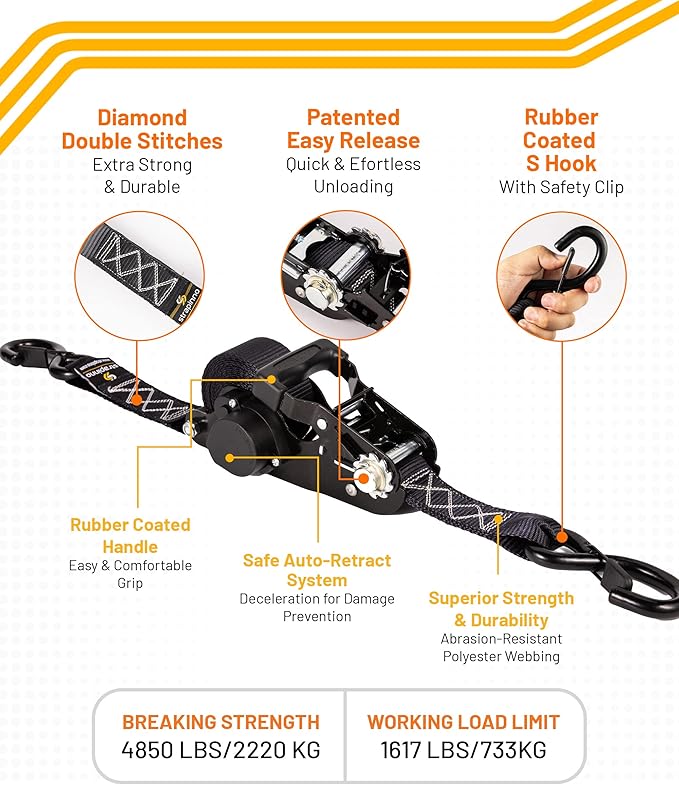
To make sure you’re getting the right straps for the job, pay attention to the working load limit (WLL) and the breaking strength. The WLL is the maximum weight the strap can safely handle, while the breaking strength is the point where the strap could fail.
When you’re hauling heavy equipment like lawnmowers, you’ll want straps with a WLL of at least 1,500 pounds and a breaking strength of around 5,000 pounds. That way, you know you’re covered.
Read more: What Size Retractable Ratchet Straps Do I Need for a Lawn Tractor?
2. Strap Material and Durability
Go for straps made from quality materials like polyester. Polyester straps hold up well against UV rays, water, and wear and tear, so they’re perfect for outdoor use.
6 Steps to Tie Down a Lawn Tractor
Below we are using Strapinno’s 1.5 in x 12 ft heavy duty ratchet strap as an example to tie down a zero-turn mower, or a tractor-style mower.
Step 1: How to Load a Lawn Tractor onto a Trailer
To get your lawn mower ready for loading, start by raising the mower deck all the way up and setting it to “transport mode.” This keeps the bottom of the mower from scraping as you load and unload it from the trailer. Once you’ve got the deck raised, you’re good to go.
When you’re driving onto the trailer, take it slow. This helps avoid any hard bumps and reduces stress on your trailer hitch. After you’ve loaded up, give the trailer a second to settle before you step off to make sure everything is stable.
A quick tip: always load your mower by driving forward, never in reverse. The direction you park matters because the hood on most mowers opens from back to front. You want the wind from driving to push the hood down, not catch under it and risk tearing it off while you’re on the road.
Step 2: Where Should a Lawn Tractor Sit on a Trailer?
A lawn tractor should be positioned so that the trailer maintains proper tongue weight while keeping the load centered over the axle. Correct weight distribution improves towing stability and reduces trailer sway.
For a zero-turn mower, most of the weight is in the back. So, you want to line up the rear wheels just a bit in front of the trailer tires or axle. That way, the weight is balanced evenly between the trailer tongue and axle. Once it’s balanced right, you can set the parking brake and shut off the engine.
For a tractor-style mower, the weight’s mostly in the front. In this case, it’s best to park the mower right in the middle of the trailer, just over the axle, so the weight isn’t too far back. This setup will also leave you some space at the rear of the trailer.
Once you’ve got everything loaded and stabilized, go ahead and engage the parking brake and turn off the mower.
Step 3: Where Do You Attach Ratchet Straps?
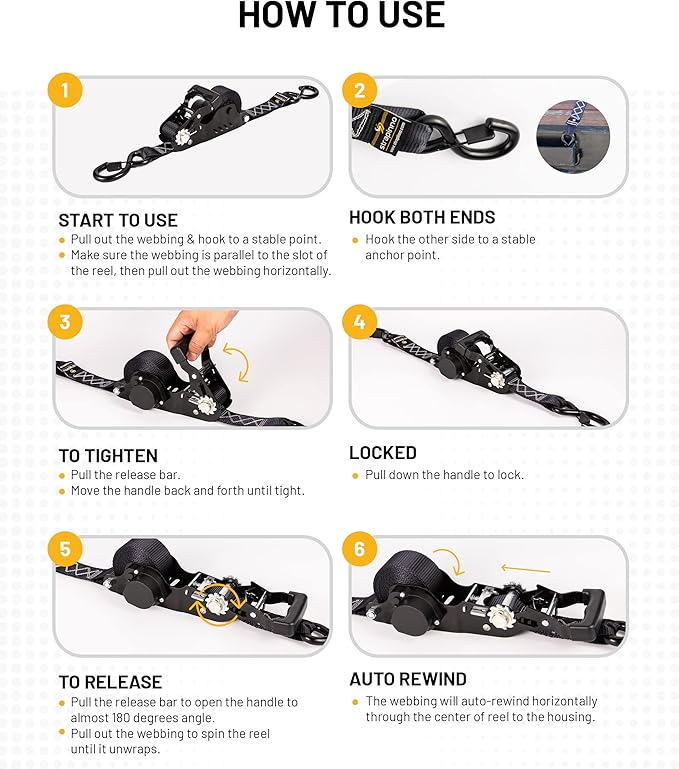
When tying down a zero-turn or tractor-style mower, you’ll want four points of contact. Use four retractable ratchet straps to secure each corner of the mower to your trailer. Pull out the webbing, and hook one end of the strap to a solid anchor point on your trailer or truck bed. Most newer trailers and trucks come with built-in tie-down points, which makes the job easier. If yours doesn’t, it’s a good idea to install something like an E-track system or D-ring anchors for extra security.
Step 4: Feed the strap over the mower (if applicable)
Hook the ratchet straps onto the frame of the mower. If you can’t find a good spot on the machine to attach the hooks, another option is to loop them around the mower’s axle. Just wrap the strap around the axle, feed the end through the hook to make a loop, and then run that same end through the ratchet to tighten it down.
Once you’ve got your anchor points, go ahead and secure the rest of the hooks the same way.
Step 5: Tighten the strap
Pull the release bar, and pull the handle up and down until it’s tight enough. Be careful not to over-tighten because it can damage the equipment or the strap itself. You want the strap to be snug but not overly tight.
To lock it in place, just push the handle down, and it’s locked. Give the mower a little shake to make sure it’s secure. If you feel any movement, tighten the straps a bit more or add extra straps if you have them, just to be safe.
Step 6: Release the straps
Pull the release bar and open the ratchet handle all the way to about 180 degrees. Give the webbing a little tug, and the strap will automatically retract!
Securing Trimmers and Other Lawn Care Equipment
1. Efficiently Strapping Smaller Tools
- Group Similar Tools Together: Keep trimmers, edgers, and other smaller tools in one group. This makes them easier to tie down and keeps them from shifting around during transport.
- Put Smaller Tools in a Box: For smaller items like bottles of herbicides or fertilizers, pack them in a box. Boxes are much easier to secure with straps and help keep things organized.
- Use Multiple Straps: For longer tools like trimmers, use two straps—one near the top and one at the bottom. This way, the entire tool is secured and won’t move around.
- Protect Delicate Parts: For tools with fragile parts, use padding or covers to keep them from getting damaged during the trip. This is especially important for trimmers with exposed blades or delicate parts.
2. Importance of Routine Checks
Make it a habit to regularly check your retractable tie-down straps for any signs of wear and tear. Keep an eye out for frayed edges, weak stitching, or bent hooks. If you spot any damage, it’s important to replace the straps right away to keep things safe and reliable. Industry standards recommend swapping them out every two to four years, depending on how often you use them and how much exposure they get to the elements.
Tips for Efficient Loading and Unloading
1. Plan Your Layout
Before you start loading, take a minute to plan how everything will fit. Put the heaviest items in the center and try to spread the weight evenly. This helps keep things stable and prevents stuff from shifting around while you’re driving.
2. Use Loading Ramps
For heavier equipment like lawnmowers, always use loading ramps to get them onto the trailer or truck bed. Ramps make the job smoother and safer, reducing the chance of injury and keeping things under control.
3. Team Up
If you can, grab a buddy to help load and unload the heavy equipment. Having an extra set of hands not only speeds things up but also adds another layer of safety.
The Key Takeaways
Transporting lawn care equipment during the busy mowing season doesn’t have to be a hassle. By using good-quality retractable tie-down straps and following the steps we’ve covered, you can make sure your gear gets where it needs to go safely and without any issues.
Whether you’re a weekend warrior or a pro landscaper, securing your equipment properly will save you from headaches, damage, and costly repairs. A little safety and preparation go a long way toward a successful mowing season. Happy mowing!
—
Ensure your lawn care equipment is transported safely and efficiently with high-quality retractable ratchet straps from Strapinno.com. Explore our range of durable and reliable tie-down solutions, perfect for both professionals and DIY enthusiasts this peak mowing season!